
👋 Good Morfternight, this is Paolo with the 108th edition of our newsletter on Product Management, Distributed Leadership, and Tech Advancements.
Over 8,500 people read it every week. I hope you’ll join us for today’s read.
Effective knowledge workers, in my observation, do not start with their tasks. They start with their time. And they do not start out with planning. They start by finding out where their time actually goes.
I didn’t write these first four sentences.
Peter Drucker did. In 1967. In “The Effective Executive.”
This goes on to show two things:
- Drucker was able to write better newsletter hooks than I ever will.
- Time management has always been at the core of any management advice. It’s not a fad or a recent Silicon Valley obsession. It’s the fundamental skill needed to do our job.
And still, we are sick of it.
At least I was.
🏆 An Alluring Promise
During my journey to become an effective head of product, I got close to burning out twice (2017, 2019). The reason for my emotional overwhelm could be directly tied back to my poor time management, and yet I found myself drowning in endless resources, methods, links, PDFs, courses, frameworks, and tools all promising the same thing:
“You’ll master your time.”
That’s an alluring promise.
But I was overwhelmed by all the content that was out there, and to a degree, I still am.
I was lucky enough to have a coach helping me to orientate myself and sort the signal from the noise to find 3 pieces of content that entirely changed my life, from which I distilled 3 principles, from which I carved out a routine that works for me and the best tools to assist me daily.
In today’s newsletter, we’ll only look at the principles.
I promise, though, to go over the methodology, and then the tools in upcoming issues of Morfternight.
⚠️ Disclaimer
I want to share the principles that dramatically increased my well-being and productivity over the past two years, but I intend to be candid too: time management has never been my forte, and for as long as I can remember, I tried to fit too much into each day.
It is why I feel confident writing this newsletter: it was not innate for me, I had to build it piece by piece, and this means that if I could do it, so can you.
These principles have contributed to:
- Not being overwhelmed (hasn’t happened since 2019, whoop whoop 🎉)
- Growing in my role as Head of Product for Jetpack & .blog at Automattic
1. Ditch Your To-Do List
Relevant content → An Exact Breakdown of How One CEO Spent His First Two Years [Blog Post]
Like Drucker said, “start by finding out where your time actually goes.” That’s precisely what Sam Corcos, co-founder & CEO of Levels, did. In the fascinating blog post I linked above, he details his time recording system (I have mine — and it’s a fun one 😊) and reaches a powerful conclusion.
If your to-do list is constrained by time anyway, you might as well use your calendar as your to-do list.

2. You Shouldn’t Always Do Your Best
Relevant content → Introducing the LNO Effectiveness Framework [X thread]
In this insightful thread around the LNO framework, Shreyas Doshi writes something that really resonated with me: “I often find that a large part of early/mid-career PMs’ work stress is due to not recognizing this: all tasks are not created equal.” All tasks fall into one of these 3 buckets:
- Leverage tasks. You expect a large return on investment (ROI).
Do an outstanding job, let your inner perfectionist shine. Take your time.- Examples: writing a product specification document, training a new manager, crafting a strategy for 2025, user research.
- Neutral tasks. You expect to break even.
Do a good job. No better.- Examples: Preparing for 1:1s with your direct reports, writing a bug report.
- Overhead tasks. Negative ROI.
Actively try to be quick. Fight your inner perfectionist. It will suffice.- Examples: Timesheets, preparing slides for an appendix, writing a callout for the company’s internal newsletter.

3. Budget your time like if it was money
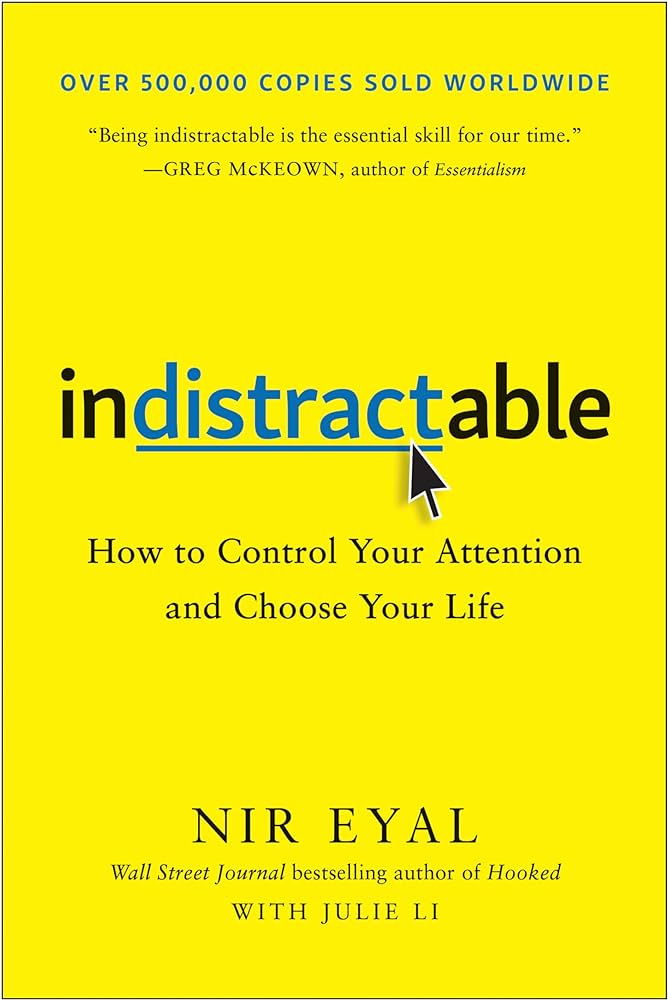
Relevant content → Indistractable [Book]
Think of all the ways people steal your time. The Roman Stoic philosopher Seneca wrote, “People are frugal in guarding their personal property; but as soon as it comes to squandering time, they are most wasteful of the one thing in which it is right to be stingy.” Though Seneca was writing more than two thousand years ago, his words are just as applicable today. Think of all the locks, security systems, and storage units we use to protect our property and how little we do to protect our time. — Nir Eyal
Someone said, “You don’t find the time. You make the time”.
I couldn’t agree more. Defining one’s priorities and investing time is the same as budgeting and investing money. If you want to use your money well, you define a budget that guarantees it’ll go towards what is most important to you.
The same applies to time: budget it and invest in your priorities.
Allocate time to the most essential parts of your life, in order of priority, to guarantee that anything you “can’t find time for” doesn’t actually matter.
📷 Meanwhile in Vienna…
When I’m not product managing, I enjoy black and white photography. 🙂
Here is a picture I took recently in Vienna for my series “Wait”

→ Add me on LinkedIn
That’s it for today. Thank you for being a Morfternighter. If someone forwarded this to you, you can subscribe. I also write and publish my photos on paolo.blog.
Cheers,

P.S.: If you enjoyed reading this, please don’t hesitate to share it.
Leave a Reply